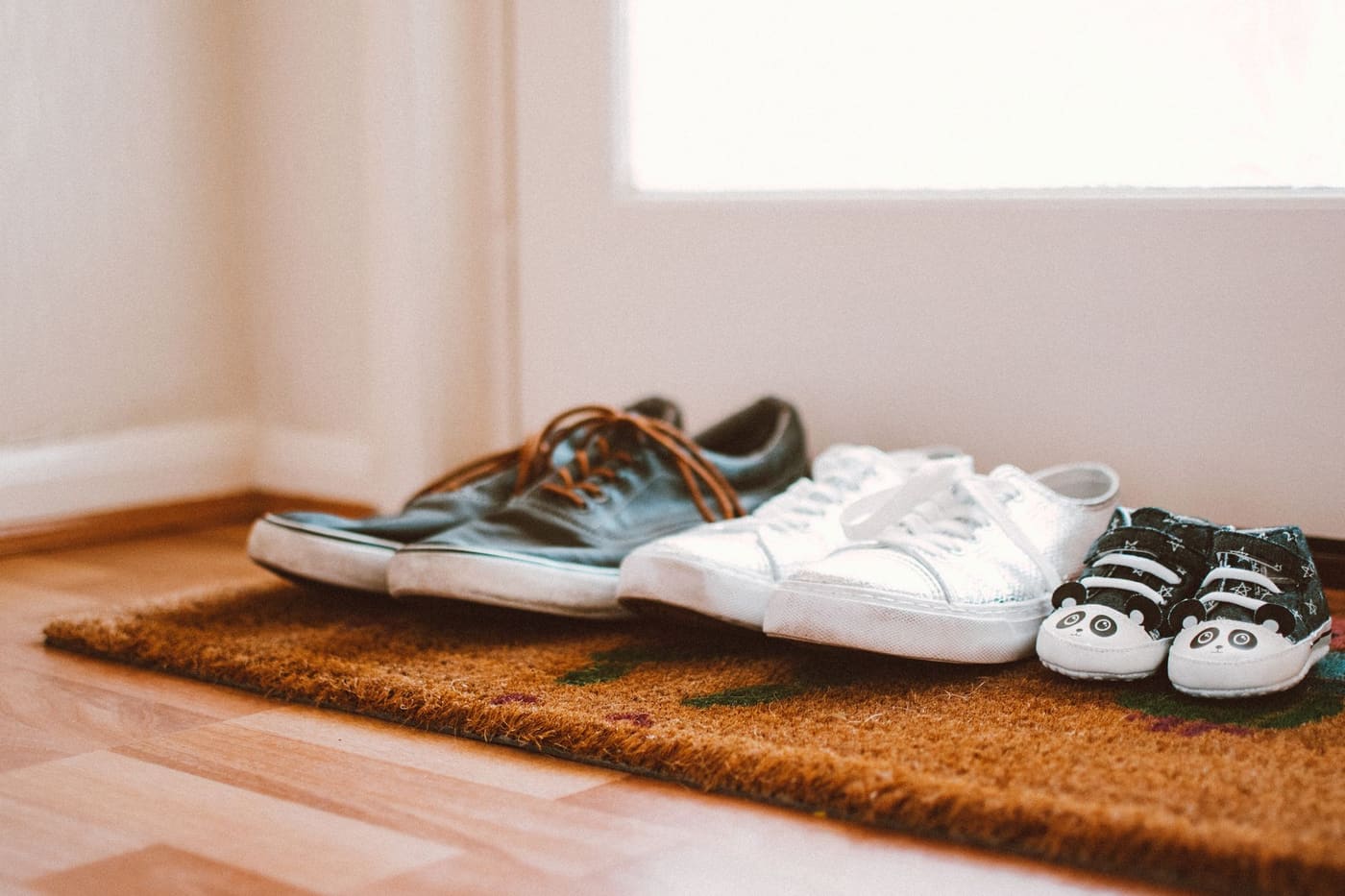
The renter-friendly entryway upgrades that actually help are the ones that solve a daily problem without damaging the unit: hooks and rails that hold real weight, a freestanding shoe cabinet or rack, a plug-in lamp, a properly sized washable rug, and a leaning mirror. Decor-only changes, such as peel-and-stick patterns, are optional extras that come after the entry works.
The tricky part for renters is not finding ideas. It is finding ones that hold up under daily use and that you can remove at move-out without losing your deposit. Many adhesive and “no-damage” products fail when loaded with wet winter coats. This guide covers what works, the limits of each option, and where you should get your landlord’s approval first.
Read the lease and test before you commit
Start with the lease and any move-in condition report. Look for language about nails, screws, paint and alterations. Some landlords allow small nail holes and picture hanging, while others forbid any drilling. When in doubt, ask in writing and keep the reply. A short email takes five minutes and can prevent a deposit deduction that costs far more than the project.
Take photos of the entry walls, floor and door before you start. Then test any adhesive product on a hidden spot, such as the inside of a closet, before using it on the main wall. Paint finishes vary. Flat or older paint, textured walls and wallpaper may peel when adhesive strips are removed. Follow the removal instructions exactly: many strips are designed to release when stretched slowly along the wall rather than pulled outward, but follow the directions on your product.
Hooks and rails that actually hold weight
Hooks are the highest-value upgrade, since coats and bags are the first things to hit the floor. Your options, from least to most permanent:
- Over-the-door hooks: No installation, and rated for fairly modest loads, so read the package. Check that your door still closes and that thick hooks do not scratch the frame. Padding on the back helps.
- Adhesive hooks and strips: Fine for light items such as keys, scarves and light jackets. Always check the rated weight, clean the surface with rubbing alcohol first, and let it cure for the time stated on the package, often an hour, before loading.
- Freestanding rack or tall shelf with hooks: Needs no wall contact, but takes floor space and should be anchored if tall, where allowed.
- Screwed-in rail: The strongest, and often the best, option. Small screw holes can usually be filled with spackle at move-out, but only do this with approval.
Heavy winter coats, wet gear and full backpacks can exceed adhesive ratings, so use screws for those if the lease allows it. Where it does not, keep the load light and spread it over more hooks.
Shoe storage that sits on the floor
Shoes are the largest source of entry mess, and the fix does not need walls. A freestanding rack, a tilting cabinet or a bench with open shelves works with no installation. A boot tray, about 1 inch deep and 30 inches long, protects the floor from water and salt.
Choose pieces with felt or rubber feet, so you do not scratch hardwood or vinyl. Tall cabinets can tip, and the U.S. Consumer Product Safety Commission recommends anchoring furniture to the wall, so if there is a way to do it without lasting damage, such as a single small screw into a stud that you can patch, ask your landlord. Otherwise choose a lower, wider piece, under 36 inches tall. For more on formats and sizes, see what shoe storage actually keeps an entryway tidy.
Lighting you can take with you
Rentals often come with a single harsh ceiling fixture. Fixing it does not require rewiring. Swap the bulb for a warm one at about 2700K, add a plug-in wall sconce with a cord cover, or place a small lamp on a console. A plug-in sconce hangs from a single hook and uses an ordinary outlet, which means no electrician and no changes to the building.
If you want to replace the fixture itself, that involves hard-wired electrical work. That is the landlord’s call, and it should be done by a licensed electrician with the power off at the breaker. Do not attempt it yourself in a rental. A stick-on motion-sensor light can help in dark halls, though check that the adhesive will come off cleanly.
Floors and mats that protect and improve
A good rug is one of the most effective changes, since it hides worn flooring, catches dirt and defines the entry. Use a low-profile, washable runner or mat, around 24 to 30 inches (60 to 75 cm) wide in a hallway, and make sure the door can swing over it. A rug pad keeps it from sliding, though check that the pad is safe for your floor type, since some rubber and vinyl backings can stain or discolor vinyl and finished wood.
For a more dramatic change, peel-and-stick floor tiles can cover dated flooring. They can leave residue or lift flooring finishes when removed, so ask permission and test a small area first.
Wall upgrades without paint or drilling
Walls often look worst in rentals, but there are options that come off cleanly:
- Removable wallpaper: Best on smooth, well-painted walls. Pre-1978 buildings may have old paint, so removal should never involve scraping, sanding or steaming if the paint is flaking. Ask your landlord about lead paint disclosures.
- Peel-and-stick wall panels or beadboard: A framed look without carpentry.
- Leaning mirror: A large floor mirror, around 24 by 60 inches (60 by 150 cm) or bigger, leaned against the wall adds light and depth. Place it where it cannot slide, and consider a small stopper or a wall strap if children or pets are around.
- Framed art on a rail or picture ledge: A single ledge uses a few holes instead of many.
Painting is sometimes allowed if you return the walls to the original color at move-out. Get that permission in writing.
Furniture that moves with you
Furniture is a good way to add function without touching the building. Pick pieces that suit more than one apartment, so they still work after a move. A slim console about 8 to 12 inches (20 to 30 cm) deep, a narrow bench, a stool and baskets are all flexible. Avoid built-in solutions that cannot come with you. See what entryway furniture is actually worth it in a small space for a breakdown of which pieces earn their footprint.
For decor that does not clutter, choose a few items in the same color family and favor pieces you can reuse in other rooms. A tray, a lamp and a plant travel well.
What not to do as a renter
Some changes cause more trouble than they solve:
- Drilling into tile, plaster or masonry without approval.
- Using strips on textured or damp walls, which fail and may pull off paint.
- Hardwiring lights, doorbells or switches.
- Blocking an exit, a smoke detector or a heating vent with furniture.
- Overloading adhesive hooks beyond their rating.
- Leaving permanent changes, such as stain or paint, that you cannot reverse.
If you want to do any of these, ask your landlord, who may do it themselves or allow a professional to do it. Costs and rules vary by state, city and building, so check local requirements.
Which upgrades pay off first
If your budget is limited, prioritize in this order: a place for coats, a place for shoes, a landing spot for keys, then lighting and the rug, and finally decor. What should renters fix first in an entryway walks through this sequence in more detail. A basic setup of hooks, a tray, a boot mat, a lamp and a runner moves with you when you leave. For polish after the basics, what makes an entryway look more expensive without a big budget lists affordable finishing touches.
Where this comes from
This article draws on the U.S. Environmental Protection Agency’s guidance on lead-based paint in older homes and landlord disclosure, the U.S. Consumer Product Safety Commission’s Anchor It guidance on furniture tip-overs, and manufacturers’ general directions for removable adhesive products (which vary by product, so follow the package). It was reviewed on 2026-10-07 against those sources. Prices, product ratings and local rules change, so check current figures with the maker, your landlord or the named agency before you buy or build.