The shoe storage that actually keeps an entryway tidy is the kind that matches how many pairs you keep by the door and how you take shoes off. For most households, that means a tilting cabinet or a closed bench for dry pairs, plus a boot tray for wet ones, with a strict limit of two or three pairs per person in the entry. Storage fails when it is too small, too hard to open, or asked to hold the whole collection.
Shoes cause more entryway mess than any other item because there are many of them, they are bulky, and they carry dirt and water. The answer is not always more furniture. It is picking a format that fits your numbers, your floor space and your habits, then keeping the rest of the collection somewhere else. This guide compares the main options and shows how to choose.
Count the pairs and decide what stays
Start by counting. Gather the shoes that currently live near the door and sort them into three piles: worn at least weekly, seasonal, and rarely worn. Only the first pile belongs in the entry. A reasonable limit is two to three pairs per adult, and one or two for each child, plus a pair of boots in winter.
Seasonal shoes can go in a closet shelf or under-bed bins. Rarely worn dress shoes can live in clear boxes in a bedroom closet. Once you know the real number, you can size storage to fit. A household of four with three pairs each needs a capacity of about 12 pairs, not 30.
Compare the main storage types
Each format has trade-offs. Here is how they stack up for daily use.
| Type | Typical capacity | Best for | Drawback |
|---|---|---|---|
| Open rack | 6 to 15 pairs | Quick access, drying | Shows all the mess |
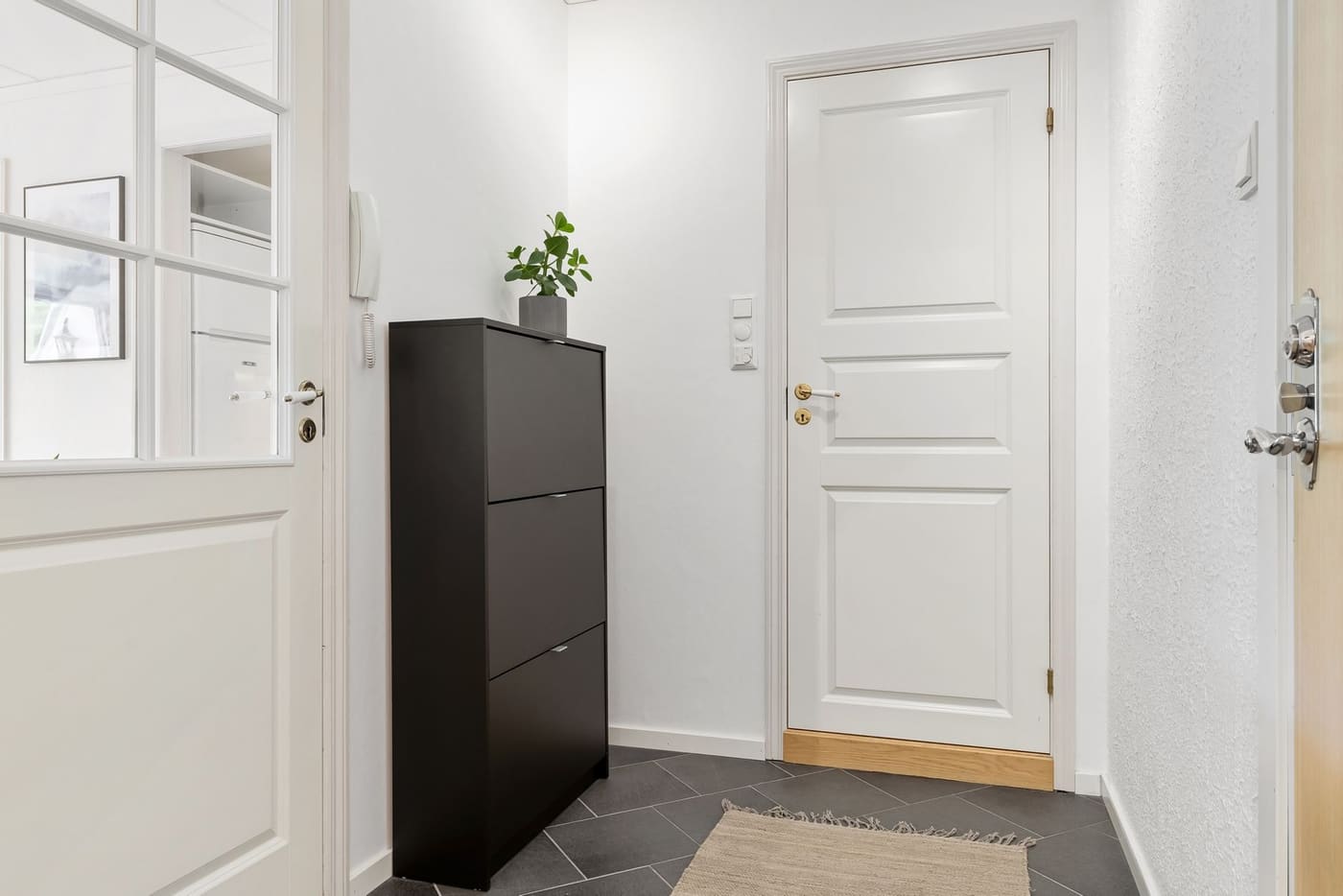
| Tilting cabinet | 6 to 18 pairs | Hiding shoes in tight spaces | Hard to dry wet pairs |
| Shoe bench with shelves | 4 to 8 pairs | Sitting and storing | Deeper than a rack |
| Boot tray | 2 to 4 pairs | Wet and muddy shoes | Only a floor surface |
| Over-the-door organizer | 6 to 12 pairs | Light shoes in tiny spaces | Cannot hold heavy boots |
| Wall-mounted shelf | 2 to 6 pairs | Slim hallways | Requires installation |
Capacities are typical ranges and vary by product. Open racks are often the most practical for people who need quick access. Closed cabinets look neater but can trap moisture if shoes go in wet.
Match the type to your space
The depth and width of your entry decide most of the choice.
- Under 36 inches (91 cm) of hall width: Use a tilting cabinet 6 to 10 inches (15 to 25 cm) deep, or a wall-mounted shelf. A floor rack that sticks out 12 inches or more can block the path.
- Wider entries or mudrooms: A bench with cubbies, or a rack with a boot tray underneath, works well, and you can add hooks above.
- No floor space at all: An over-the-door organizer or a narrow shelf under a console. Be careful that the door can still close and that the weight is within the rated limit.
- Renters: Choose freestanding pieces, and see what renter-friendly entryway upgrades actually help for options that do not require drilling.
For layouts in very small spaces, how to make a tiny entryway more functional explains clearances and flow.
Deal with wet shoes, boots and mud separately
Wet and muddy shoes ruin storage and floors, and they make a closed cabinet smell. Give them a separate zone. A rubber or plastic boot tray with a raised edge of about 1 inch (2.5 cm) holds melting snow and mud. Place it near the door, and keep a small towel or brush nearby.
Let wet shoes dry before they go into a cabinet. Stuffing them with newspaper or leaving them near, but not on top of, a heat source speeds drying. Do not put shoes directly on a radiator or heater: heat can damage leather and glue, and shoes left on a heater can be a fire risk. A mat with a textured surface scrapes off much of the mud before it comes in.
If the household has a shoes-off rule, put the tray on the inside of the door, with a seat or stool where people can sit to remove laces. This simple arrangement keeps most of the dirt out of the home.
Pick storage people will actually use
The best storage is the one that takes the least effort. A cabinet door that has to be opened, a tilt drawer that sticks, or a shelf that is out of reach for a child gets skipped, and shoes end up in a pile. Test candidates for these:
- One-hand use: Can you put a shoe away while carrying a bag?
- Reachable height: Keep daily pairs between knee and shoulder height, and put children’s pairs on the lowest shelf.
- Visibility: Can people see what is in there, or do they forget and leave pairs out?
- Stability: Does it hold up when you lean on it to remove a shoe?
- Cleaning: Is it easy to wipe down or vacuum under?
If you have a mixture of heavy boots and light shoes, put the heavy ones on the bottom shelf, since tall, top-heavy furniture can tip. Anchor tall cabinets to the wall, as the U.S. Consumer Product Safety Commission recommends for furniture that can tip, especially if children are present.
Size shelves and spaces correctly
Many shoe racks fail because their shelves are too narrow or too short. An adult sneaker is often about 11 to 12 inches (28 to 30 cm) long, and a men’s boot can reach 13 inches (33 cm) or more. High heels and tall boots need extra height, often 10 to 14 inches per shelf for boots. A rack that holds “12 pairs” often assumes small shoes stacked tightly, so use that number as a ceiling and plan on a lower real capacity.
Check the weight rating if you plan to put heavy boots on shelves. A few budget racks bend under a full load, and wire racks can mark floors without rubber feet. Add felt or rubber pads under legs to protect hard floors.
Think about air, smell and maintenance
Closed storage hides shoes but also traps moisture and odor. Choose cabinets with ventilation slots or a gap at the bottom. Rotate pairs so none stays in the dark for months. Place a few cedar blocks or a small odor absorber inside a cabinet if smell is a concern, and wash or air out shoes regularly.
Wipe the rack or tray with a mild soap and water solution once a month, and vacuum or sweep under it. Do not use bleach together with other cleaners, and do not mix cleaning products. Wear gloves and ventilate if you are using a strong cleaner. In winter, salt stains can mark floors and mats, so wipe up residue promptly.
Build a routine around the storage
Even a good rack fails without a habit. Make a simple rule: shoes come off at the door and go straight to the rack or tray, and any pair not worn this week goes back to the closet. Do a quick reset each evening, and a longer check each season. For help building habits that stick, see how to stop an entryway from becoming a dumping ground.
If you are choosing furniture to go with your shoe storage, what entryway furniture is actually worth it in a small space lists which pieces earn their footprint.
Safety notes
Keep the path to the door clear of shoes, since piles are a tripping hazard and can block an exit. Anchor tall units to studs or with proper anchors. If you hang wall shelves, use hardware rated for the load, and ask a handyperson if you are unsure what is behind the wall. Homes built before 1978 may have lead-based paint, and the EPA advises against dry sanding or scraping it when installing anything.
To size the shoe storage to your household, use the entryway storage capacity calculator.
Where this comes from
This article draws on the U.S. Consumer Product Safety Commission’s Anchor It guidance on furniture tip-overs, the U.S. Environmental Protection Agency’s guidance on lead-based paint in homes built before 1978, and general footwear-care practice; shoe dimensions given here are typical approximations, so measure your own pairs. It was reviewed on 2026-10-07 against those sources. Prices, product ratings and local rules change, so check current figures with the maker, your landlord or the named agency before you buy or build.