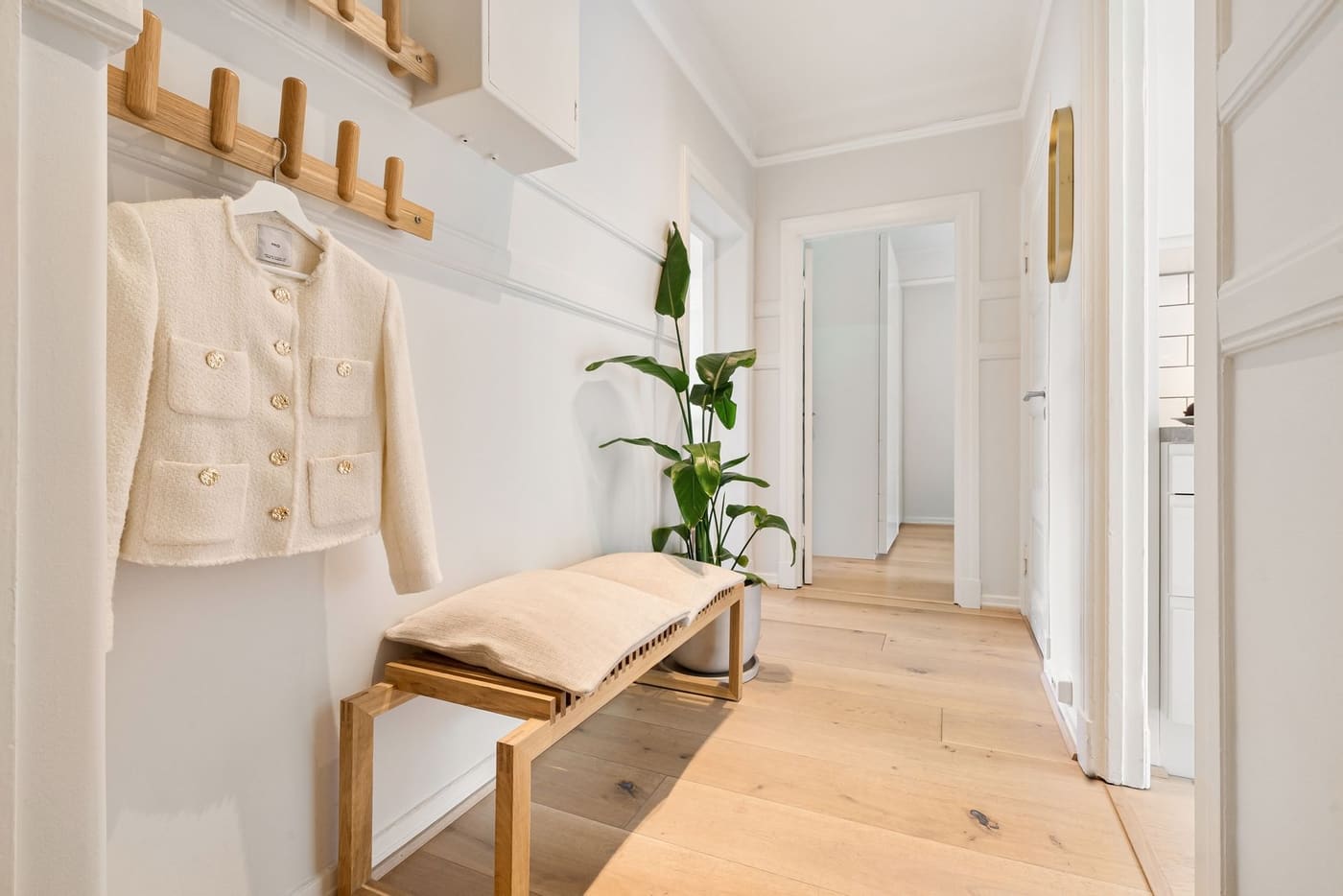
You make a tiny entryway more functional by using vertical space first, choosing shallow furniture under 12 inches deep, and assigning one spot to each daily item so nothing lands on the floor. Even a 3-by-4-foot landing can handle coats, shoes, keys and mail if every piece is sized for the space and the walkway stays clear.
In a small entry, the problem is rarely a lack of storage options. It is that the available floor is tiny and every item competes for it. The answer is to measure carefully, move storage onto the wall and behind the door, and edit what you keep there. This guide walks through how to plan the layout, what to put where, and what to skip.
Measure the space and the clearances before shopping
Start with a tape measure. Record the width and depth of the entry, the swing of the door, and any radiator, vent, outlet or light switch you need to keep accessible. Note whether the door opens into the room or out toward the hall.
Useful clearances to aim for:
- Walking path: At least 30 to 36 inches (76 to 91 cm) of clear width where people pass. In a very tight space, 30 inches is workable, though it feels snug with bags.
- Door swing: Keep furniture clear of the full arc. A door that bumps a bench every time will damage both.
- Furniture depth: 8 to 12 inches (20 to 30 cm) for anything along a wall in a narrow hall. A standard console is often 12 to 16 inches, which may be too deep.
- Egress: Never block the path to the exit. Keep it clear for emergencies.
Draw a quick sketch on paper with these numbers. It stops you from buying a piece that fits on the product page but not in your hall.
Go vertical: the wall is your biggest asset
Because floor space is limited, hang storage on the wall. A single rail of hooks at 66 to 72 inches (167 to 183 cm) holds more than a coat rack and takes only a few inches of depth. If you have an extra foot of wall, add a narrow shelf above the hooks, around 6 to 8 inches (15 to 20 cm) deep, for hats, baskets and a small tray.
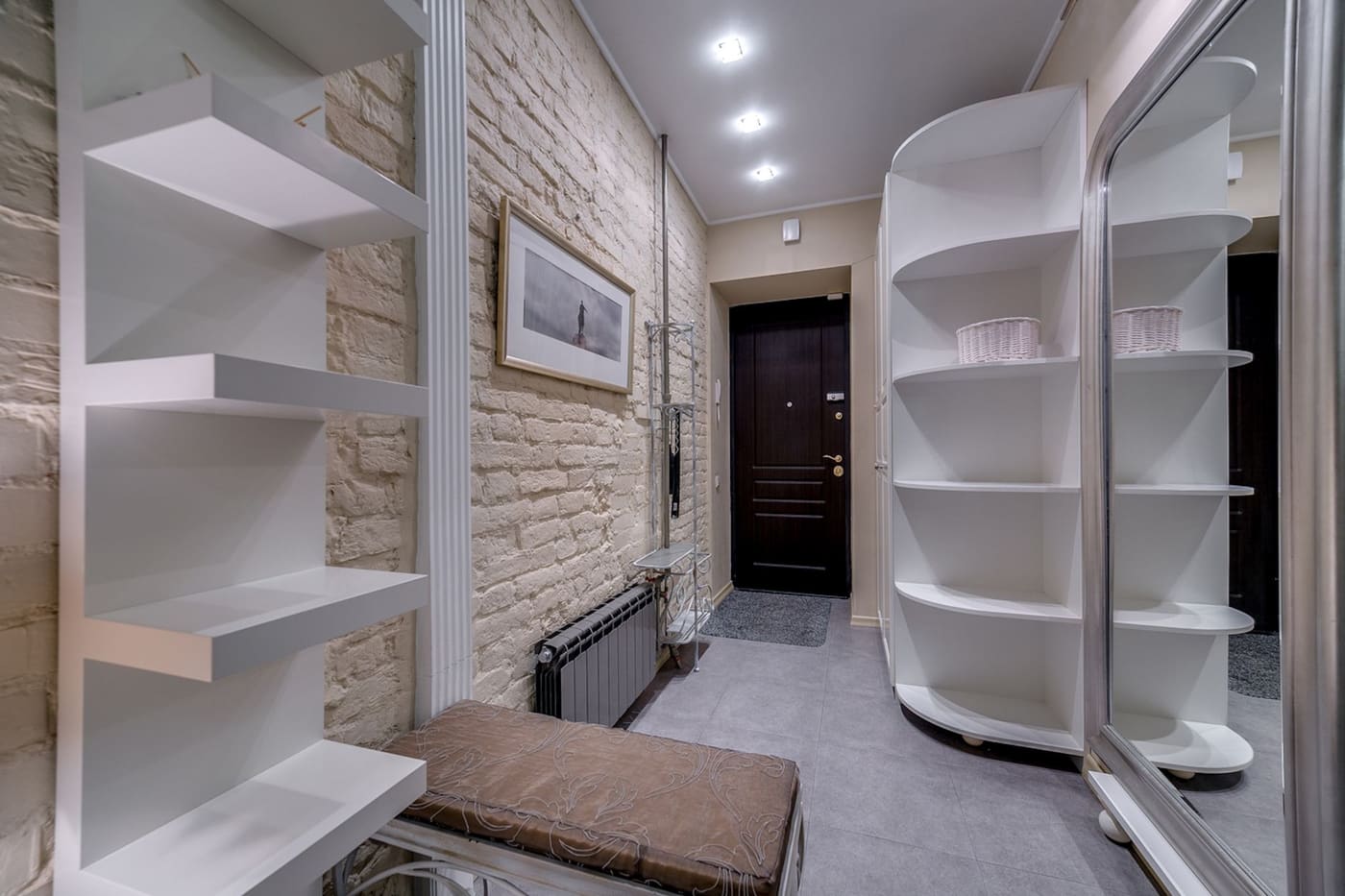
Other vertical options include:
- Wall-mounted key rack or small shelf with a lip for keys, sunglasses and a charger.
- Over-the-door hooks or an over-the-door organizer for bags and scarves, as long as the door still closes properly and the hardware does not scratch it.
- A wall-mounted fold-down seat, which stays flat when not needed and gives you a place to put on shoes.
- Wall-mounted shoe cabinets, which tilt down and are usually 6 to 8 inches (15 to 20 cm) deep.
Check the wall type before drilling. Drywall needs anchors or studs for anything heavy. If the wall is plaster, or if you are not sure what is behind it, ask a handyperson, since drilling can hit wiring or pipes.
Pick slim, multi-use furniture
In a tiny entry, each piece needs more than one job. The most useful options are shallow and either wall-mounted or leggy, so you can see the floor beneath them.
| Piece | Typical depth | Best use |
|---|---|---|
| Narrow console | 8 to 12 in (20 to 30 cm) | Tray, lamp, small drawer |
| Slim shoe cabinet | 6 to 10 in (15 to 25 cm) | Hides 6 to 12 pairs |
| Slim bench | 12 to 14 in (30 to 35 cm) | Seat with shoe storage |
| Wall shelf with hooks | 6 to 8 in (15 to 20 cm) | Coats and small items |
| Stacking baskets | varies | Seasonal accessories |
For help deciding which pieces earn their space, see what entryway furniture is actually worth it in a small space. Skip large benches, deep storage cubes and decorative tables that do not hold anything useful.
Handle shoes with a strict limit
Shoes take more floor than anything else. In a tiny entry, limit the display to the pairs worn this week, typically two or three per person, and store the rest in a closet or under a bed. A tilting cabinet, a narrow rack, or a single boot tray placed on the floor keeps wet and muddy pairs contained.
If the rest of the home is small, consider a shoes-off rule at the door and a single tray for wet pairs. A tray with a raised edge, around 1 inch high, stops melting snow from spreading. For options and sizes, see what shoe storage actually keeps an entryway tidy.
Create one landing spot for small items
Keys, wallet, phone, sunglasses and mail are the things that scatter. Give them a single tight home: a small tray, a wall pocket, or a shallow drawer. A spot that is about 8 by 10 inches (20 by 25 cm) is enough for the basics.
Add a small step to the routine: when you walk in, you place keys in the tray before you take off your coat. It takes five seconds and removes the daily search. If you often have packages or outgoing mail, a lidded basket on the floor under a shelf holds them without adding visible clutter.
Use mirrors and light to make the space feel bigger
Function includes comfort. A narrow entry that feels cramped is less pleasant to use. A mirror across from a light source doubles the sense of depth and lets you check yourself on the way out. Choose one at least 20 by 30 inches (50 by 75 cm), and mount it securely.
Lighting matters too. A plug-in sconce or a small lamp avoids hardwiring and saves floor space. Use warm bulbs, around 2700K, for a welcoming look, and brighter ones if you need to see well. Any change to hard-wired fixtures or switches should be done by a licensed electrician, and you should never work on live wiring.
Use the back of the door and the corners
Two spots that tiny entries tend to waste are the back of the entry door and the corners. A flat over-the-door rack or a slim hanging pocket organizer adds room for dog leashes, gloves, masks and umbrellas. Check the clearance between the door and the frame first, since thick hooks can stop the door from closing, and use padding if the hardware could scratch the finish. In a corner, a tall and narrow shelf unit, 10 to 12 inches wide, can hold baskets without eating into the walkway, and a corner hook stack can carry bags. Just keep the corner item clear of the door swing and anchor tall units to the wall.
Keep the system small enough to maintain
A tiny entryway is tidy only if the system is easy. Limit hooks to what the household needs, plus one or two for guests. Put a small bin or basket by the door for things that need to leave the house, such as returns or library books. Do a two-minute reset each night: shoes back, tray emptied, mail sorted.
If clutter keeps coming back, the cause is usually habit and not size. How to stop an entryway from becoming a dumping ground walks through the routines that help most. And if your entry is also visually crowded, how to add entryway storage without making it look busy can help you simplify the look.
Safety and when to call a pro
Anything you mount to a wall should be rated for the load, and heavy items should go into studs or proper anchors. Tall, narrow furniture can tip, and the U.S. Consumer Product Safety Commission recommends anchoring it to the wall, especially if children are around. Do not block the door, a smoke detector, a thermostat or an electrical panel. Moving outlets, switches or lights, or cutting into a wall, is work for a licensed professional. Homes built before 1978 may have lead-based paint, and the EPA advises against dry sanding or scraping it while you install hardware.
To space hooks and check clearances, try the hook and shelf spacing calculator.
Where this comes from
This article draws on common space-planning rules of thumb for walkway width and furniture depth (conventions, not official standards), the U.S. Consumer Product Safety Commission’s Anchor It guidance on tip-over prevention, and the U.S. Environmental Protection Agency’s guidance on lead-based paint in homes built before 1978. It was reviewed on 2026-10-07 against those sources. Prices, product ratings and local rules change, so check current figures with the maker, your landlord or the named agency before you buy or build.