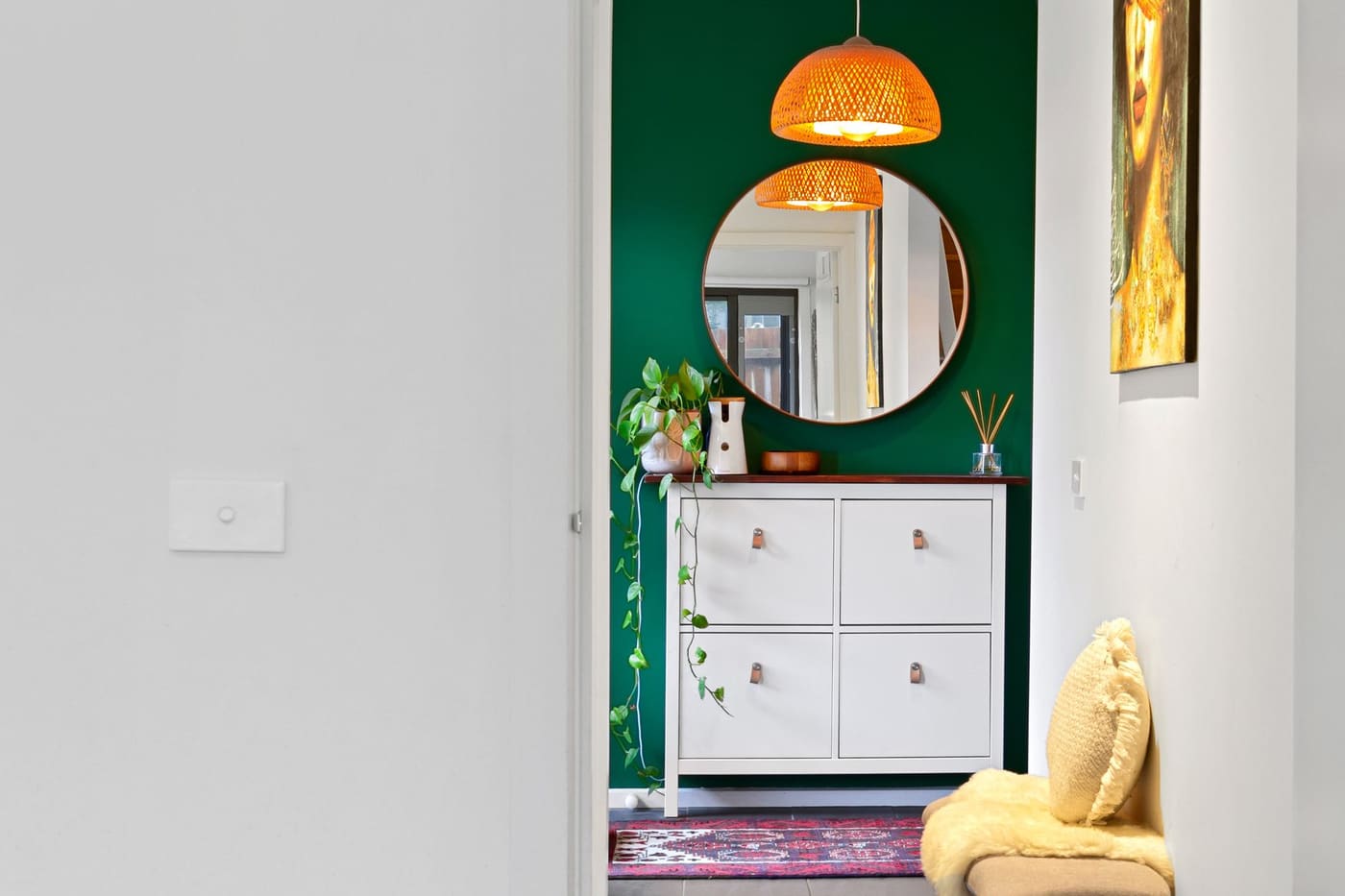
The entryway furniture that is actually worth it in a small space is a slim shoe cabinet, a shallow console or wall shelf with hooks, and sometimes a narrow bench, as long as each piece is under about 12 to 14 inches deep and does its job every day. Anything deeper, purely decorative, or that blocks the walkway usually costs more in space than it returns in function.
Small entryways have little room for mistakes. A piece that looks good in a showroom can eat the only clear floor in a hallway, and a “storage” item that is hard to open will become a surface for piles. The sections below compare the common options, give realistic sizes, and flag the ones that tend to disappoint.
Set the rules before you shop
Use a short filter to decide whether a piece belongs. It should pass all of these:
- Fits the clearance: Leaves at least 30 to 36 inches (76 to 91 cm) of walking width, and does not hit the door swing.
- Does a daily job: Holds something you handle every day, such as shoes, keys or coats.
- Is shallow: Under 12 to 14 inches (30 to 35 cm) deep in a narrow hall.
- Is easy to use: Opens or tilts with one hand, since you are often carrying things.
- Is stable: Sturdy enough to sit on or lean against, and anchorable if tall.
Measure the space and tape the footprint of the piece on the floor with painter’s tape. Walk the path with a bag in your arms. If it feels tight, the piece is too big.
Slim shoe cabinets: usually worth it
A tilting shoe cabinet is one of the best uses of small-space furniture. It holds around 6 to 15 pairs in a depth of about 6 to 10 inches (15 to 25 cm), and it hides the visual mess. Look for one with ventilation slots or a gap so shoes can dry, and a sturdy hinge. Models with a flat top give you a surface for a tray and lamp.
Prices vary widely by material and brand, so compare current listings. Check the weight limit per shelf, since it is not unusual for budget cabinets to sag under heavier boots. Some low-cost units can tip if the tilt-out drawers are overloaded, so anchor tall ones to a wall stud, as the U.S. Consumer Product Safety Commission advises for furniture that can tip.
For a fuller comparison of shoe storage formats, see what shoe storage actually keeps an entryway tidy.
Narrow consoles and wall shelves: good if shallow
A console gives you a landing surface for keys and a lamp, plus a drawer or shelf below. In a small space, the depth matters more than anything else. Look for 8 to 12 inches (20 to 30 cm) deep, and consider a wall-mounted version, which leaves the floor visible and feels lighter. A floating shelf with a few hooks underneath can replace both a console and a coat rack.
Wall-mounted pieces must be installed into studs or with appropriate anchors, and the wall type changes what hardware you need. If you are not comfortable with drilling, a handyperson can mount it. Renters should check the lease first. If you cannot drill, a freestanding slim console is a fair substitute.
Benches: only if there is room, and only with a job
A bench is useful for putting on shoes, and for people with limited mobility, it can be important.
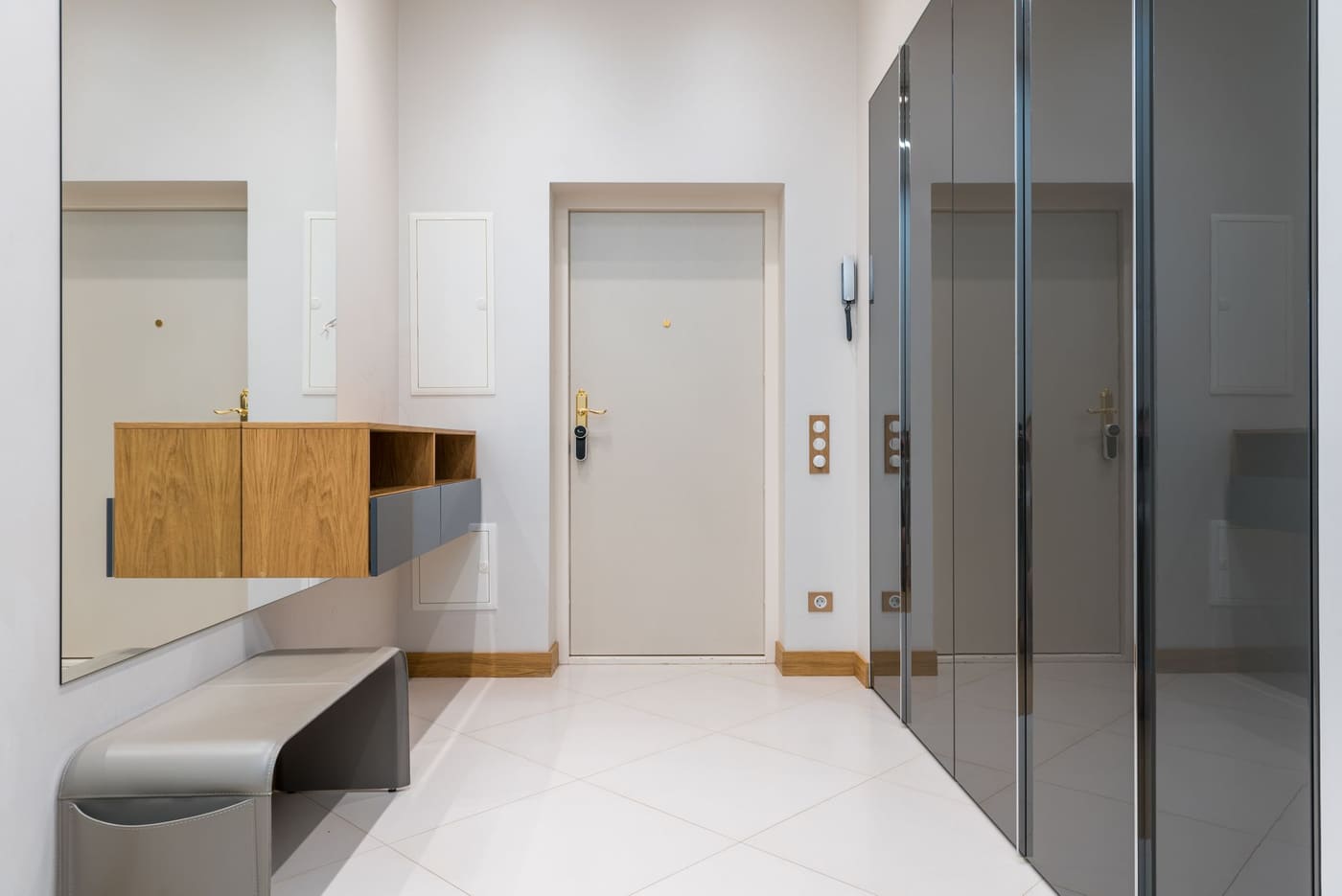
If you want one, choose a narrow version, about 10 to 12 inches (25 to 30 cm) deep, with built-in shoe storage or open shelving beneath. A bench with a lift-up lid can hold seasonal items but is awkward for daily use. Avoid benches with purely decorative cushions, since they become a place to drop bags. In a really tight entry, a wall-mounted fold-down seat or a simple stool that can tuck under a shelf makes more sense.
Weight capacity matters. Check that the bench is rated for adults, and look for non-slip feet if you have hard floors.
Compare the common options
| Piece | Typical depth | Worth it in a small space? |
|---|---|---|
| Tilting shoe cabinet | 6 to 10 in | Yes, usually |
| Wall shelf with hooks | 6 to 8 in | Yes |
| Slim console | 8 to 12 in | Yes, if shallow |
| Narrow shoe bench | 10 to 14 in | Sometimes |
| Standard storage bench | 14 to 18 in | Rarely |
| Coat rack stand | floor footprint 15 to 20 in | Rarely, tips and crowds |
| Hall tree | 12 to 18 in | Only in wider halls |
Depths are typical ranges and vary by product.
Pieces that tend to disappoint
Some popular items often do not earn their space:
- Freestanding coat racks: They take up floor, tip when loaded, and gather piles of jackets. A wall rail is typically better.
- Large hall trees: They combine a bench, hooks and shelf, but the footprint is large for small entries and they can be unstable.
- Deep storage ottomans: Hard to access, so they become a dumping spot.
- Decorative console tables with no storage: They give a surface that collects clutter, and the legs add visual weight.
- Cube storage with open bins: These show every item, which makes the area look busy.
If one of these is already in your entryway, test whether it is being used for its intended job. If not, replace it with something shallower or wall mounted.
Used furniture is often a smart route for entry pieces. Solid wood consoles and cabinets sold secondhand typically cost a fraction of new prices, and a coat of paint plus new pulls can modernize them. Check for wobble, sticky drawers, strong odors and signs of pests before buying, and measure the depth twice. Painted pieces made before 1978 may have lead paint, and the EPA advises against dry sanding them, so choose a different piece if the paint is chipping.
Match the furniture to the material and environment
Entryways take abuse: wet shoes, sand, salt and scuffs. Choose finishes that wipe clean, such as painted wood, laminate or metal. Raw wood or fabric can stain. Check that the bottoms of cabinets sit slightly off the floor, around 2 to 4 inches (5 to 10 cm), to allow cleaning and airflow. If you have pets or children, avoid sharp corners and heavy items that can fall.
Use a mat or tray under wet shoes to protect furniture. If your home has hard floors, felt pads under the feet prevent scratches.
Safety and when to get help
Tall, narrow furniture can tip, so anchor it to the wall with the provided hardware if children or pets are present. Do not place furniture where it blocks the exit or a heating vent. For wall mounts, use hardware rated for the weight and anchor into studs where possible. If you are unsure about what is inside the wall, or the job involves moving an outlet or switch, hire a professional, and always use a licensed electrician for electrical work. In homes built before 1978, old paint may contain lead, and the EPA advises against dry sanding or scraping it.
To see how these pieces fit into a full layout, how to make a tiny entryway more functional covers measuring and flow. Renters who cannot mount things can find workable choices in what renter-friendly entryway upgrades actually help.
For a wider comparison of storage types, see the entryway storage buying guide.
Where this comes from
This article draws on the U.S. Consumer Product Safety Commission’s Anchor It guidance on furniture tip-overs, the U.S. Environmental Protection Agency’s guidance on lead-based paint in homes built before 1978, and common furniture-sizing rules of thumb (conventions, not official standards). It was reviewed on 2026-10-07 against those sources. Prices, product ratings and local rules change, so check current figures with the maker, your landlord or the named agency before you buy or build.