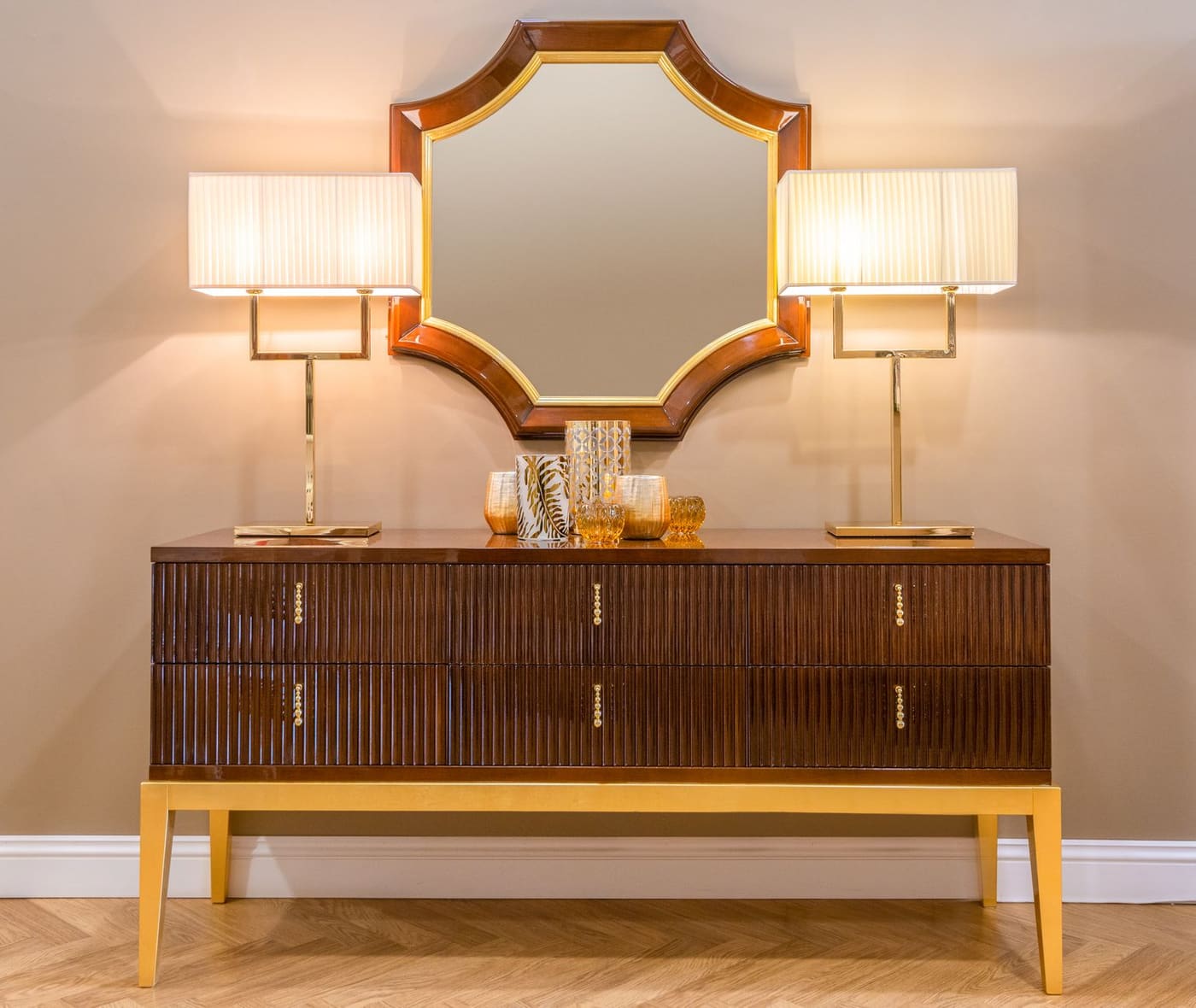
An entryway looks more expensive when it is clean, well lit, coordinated in color and material, and hung and styled with care, and none of that requires a big budget. Paint, lighting, a properly sized mirror and rug, consistent hardware and a clutter-free surface do far more than costly furniture.
“Expensive” in a room usually means intentional. Everything looks chosen, scaled correctly and cared for. Cheap-looking spaces tend to share the same problems: mismatched finishes, harsh bulbs, items that are too small for the wall, visible clutter and scuffed surfaces. Fix those and the same entry reads as a more polished one. Here is what to change, roughly in order of impact per dollar.
Start with paint and clean surfaces
Paint is the cheapest big upgrade. A gallon of interior paint is commonly labeled to cover about 350 to 400 square feet, which is more than enough for most entries; check the can for your product. Choose a satin or semi-gloss finish for walls and trim in a high-traffic area, since it wipes clean more easily than flat.
Good options include a warm off-white that bounces light, a deep muted color such as green, navy or charcoal for drama, or the same color on walls and trim for a seamless look. Painting the door a contrasting or deeper tone is another popular move.
Before painting, clean the walls, fill nail holes, and tape carefully. Neat edges matter more than the color itself. Also scrub scuffs, replace yellowed switch plates, and fix scratched baseboards with touch-up paint.
Safety note: if your home was built before 1978, painted surfaces may contain lead. The EPA advises against dry sanding or scraping, so if paint is chipping, follow its lead-safe guidance or use a lead-safe certified contractor. Renters need landlord approval before painting.
Fix the lighting
Lighting changes how everything looks. Harsh, cool bulbs make a space feel like a utility corridor, while warm, layered light feels expensive.
- Bulb color: Use warm white, about 2700K, in all fixtures so they match.
- Brightness: Aim for a bright enough overhead light for safety, and add a lamp for ambiance.
- Dimmers or smart bulbs: A plug-in or bulb-based dimmer lets you lower the light in the evening.
- Plug-in sconces: These add a layer without wiring.
- Shades: Replace a dated or broken fixture shade, or swap the fixture itself.
Swapping a hard-wired fixture involves electricity. Turn off the circuit at the breaker and confirm it is dead, or hire a licensed electrician. Bulb and shade changes do not require this. A simple table lamp with a linen shade on a console often changes the whole feel.
Add a properly scaled mirror or art
Scale is the most common budget mistake. Small art on a big wall looks lost. A large mirror, at least 24 by 36 inches (60 by 90 cm) and ideally wider than a third of the furniture below it, adds light and depth. A common rule of thumb is to hang it with its center around 57 to 60 inches (145 to 152 cm) from the floor.
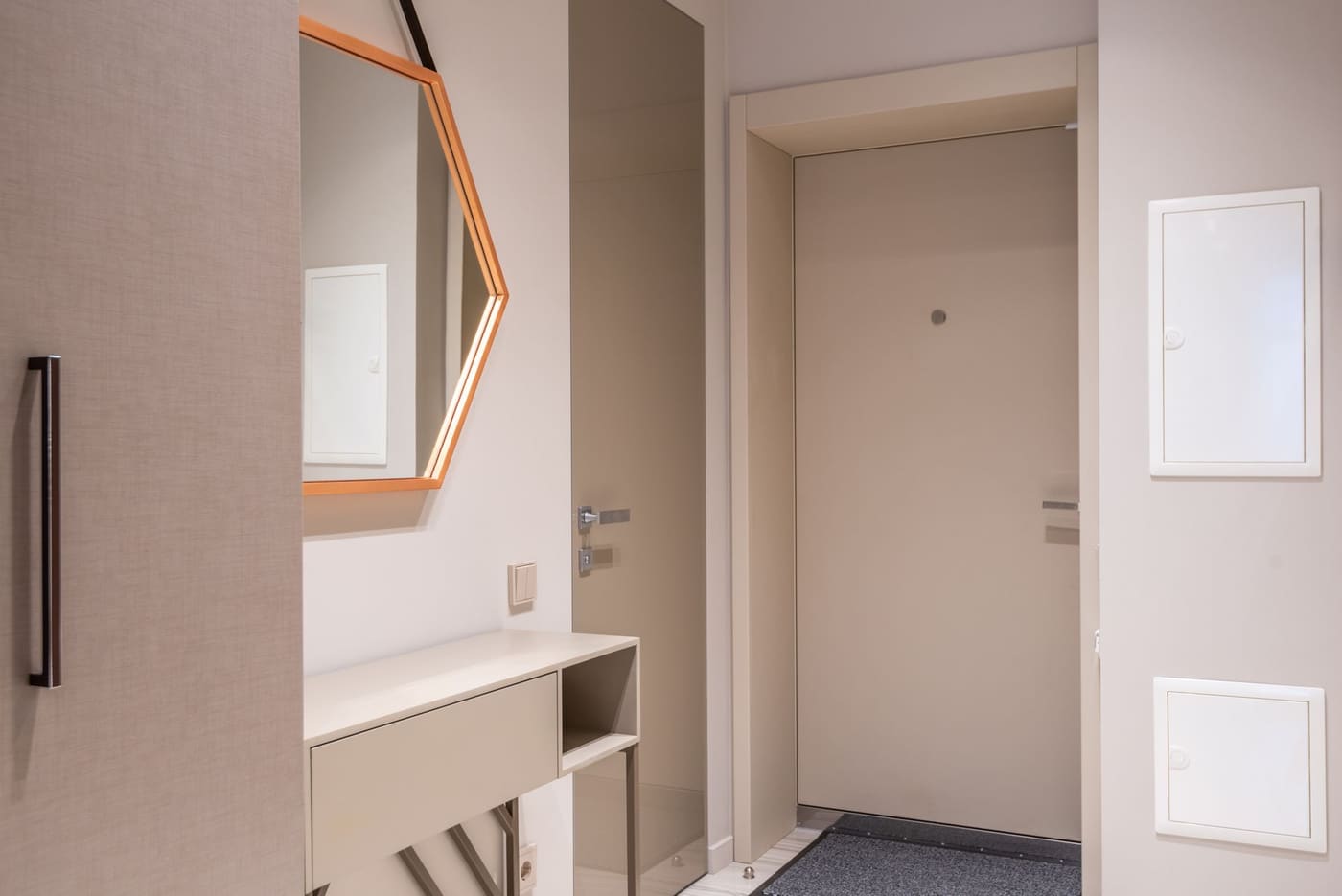
If you want art, use one big piece, or a frame with a wide mat, which looks more custom. Standard frames with mats are available in many sizes at low prices, and a mat makes a poster look like gallery art. Keep frames in the same finish. Mount heavy mirrors with proper anchors or into studs. Renters who cannot drill can lean a large floor mirror against the wall, with a safety strap if recommended.
Use a runner or rug that is the right size
A rug in the wrong size is one of the clearest signs of a cheap look. In an entry, the rug or runner should be big enough that shoes and the door swing can rest on it. For a hallway, a runner 24 to 30 inches (60 to 75 cm) wide with a few inches of bare floor on each side usually looks right.
Choose a flat-weave or low-pile rug in a washable material, and always use a rug pad so it does not slide, which is both a safety and a quality factor. Rugs with muted patterns hide dirt better than solid light colors. Synthetic fibers such as polypropylene and polyester are commonly sold as easy-care options for entries.
Make the hardware and finishes match
Mismatched finishes make a space look pieced together. Pick one metal, such as matte black, brushed brass or brushed nickel, and repeat it in hooks, lamp bases, frames, drawer pulls and switch plates.
| Finish | Look | Where to repeat it |
|---|---|---|
| Matte black | Modern, crisp | Hooks, frames, lamp |
| Brushed brass | Warm, classic | Pulls, mirror frame |
| Brushed nickel | Neutral, soft | Hooks, hardware |
| Natural wood | Warm, organic | Rail, tray, bench |
Replacing cabinet or drawer pulls on a cheap console is a quick upgrade. Many pulls fit standard hole spacing, so measure first and you can often swap them with a screwdriver. A basic console with new hardware and a coat of paint can look like a much more costly piece.
Think about sightlines as well. What you see first when the door opens matters most, so put the best element, such as the mirror, a lamp or a painted wall, directly in view and keep the sides plain. Straighten frames with a small level, which costs a few dollars and keeps lines crisp. Make sure everything hangs at a consistent height, with the spacing between items equal. Even inexpensive pieces look deliberate when they are level, aligned and spaced evenly, while costly pieces look sloppy when they are crooked or crowded.
Style with restraint
Expensive spaces tend to have fewer, better things. Clear the surface and bring back only a few items: a lamp, a tray, a small plant or branches in a vase, and perhaps a stack of books. Group in threes, vary heights, and leave empty space.
Hide the visual noise. Put shoes in a cabinet or on a neat rack, use matching baskets, and keep a single hook per coat. For ideas on keeping decor calm, see how to decorate an entryway without cluttering it. Real or good faux greenery adds life, as long as it is dusted and healthy.
Cleaning is part of the look. Dust the baseboards, wipe the door and frame, wash the glass in or beside the door, and vacuum or shake out the rug weekly. Fresh scents, such as a simple diffuser or a clean-smelling doormat, add to the impression, though avoid heavy fragrance. Use mild cleaners only, never mix bleach with ammonia or acids, and ventilate while you work. Fresh caulk where the trim meets the wall hides gaps and makes trim look custom, and it is a good low-effort project for a weekend afternoon.
Upgrade small details that people touch
Touchpoints signal quality. A new door handle or deadbolt cover, a doorbell with a clean finish, a house number in a good font, and a crisp doormat all matter. Replace worn weatherstripping and fix a squeaky hinge with a drop of oil, since small sounds and drafts register as cheapness. If you rent, ask permission before changing hardware, or keep the originals to reinstall when you move out.
Order matters when money is tight. Spend first on what covers the largest area, which is the wall color and the light. Then move to the pieces at eye level, such as the mirror and lamp, and last to the details at hand height, such as hooks and pulls. It is also fine to wait: a single well-chosen item bought slowly looks better than a bundle of quick, mismatched buys. Secondhand frames, lamps and mirrors can often be found for a few dollars and look right after paint or a new shade.
Renters and low-budget routes
Many of these changes work in rentals. Removable wallpaper, peel-and-stick tile, plug-in sconces, command-style hooks and rugs do not damage walls or floors when used according to instructions. Our guide to what renter-friendly entryway upgrades actually help lists options and limits. For the storage side of a polished look, how to add entryway storage without making it look busy shows how to hide the practical stuff.
Where this comes from
This article draws on common interior-design rules of thumb for scale, lighting color and hanging heights (conventions, not official standards), the U.S. Environmental Protection Agency’s guidance on lead-based paint in homes built before 1978, and the Centers for Disease Control and Prevention’s warning not to mix bleach with ammonia or acids. It was reviewed on 2026-10-07 against those sources. Prices, product ratings and local rules change, so check current figures with the maker, your landlord or the named agency before you buy or build.